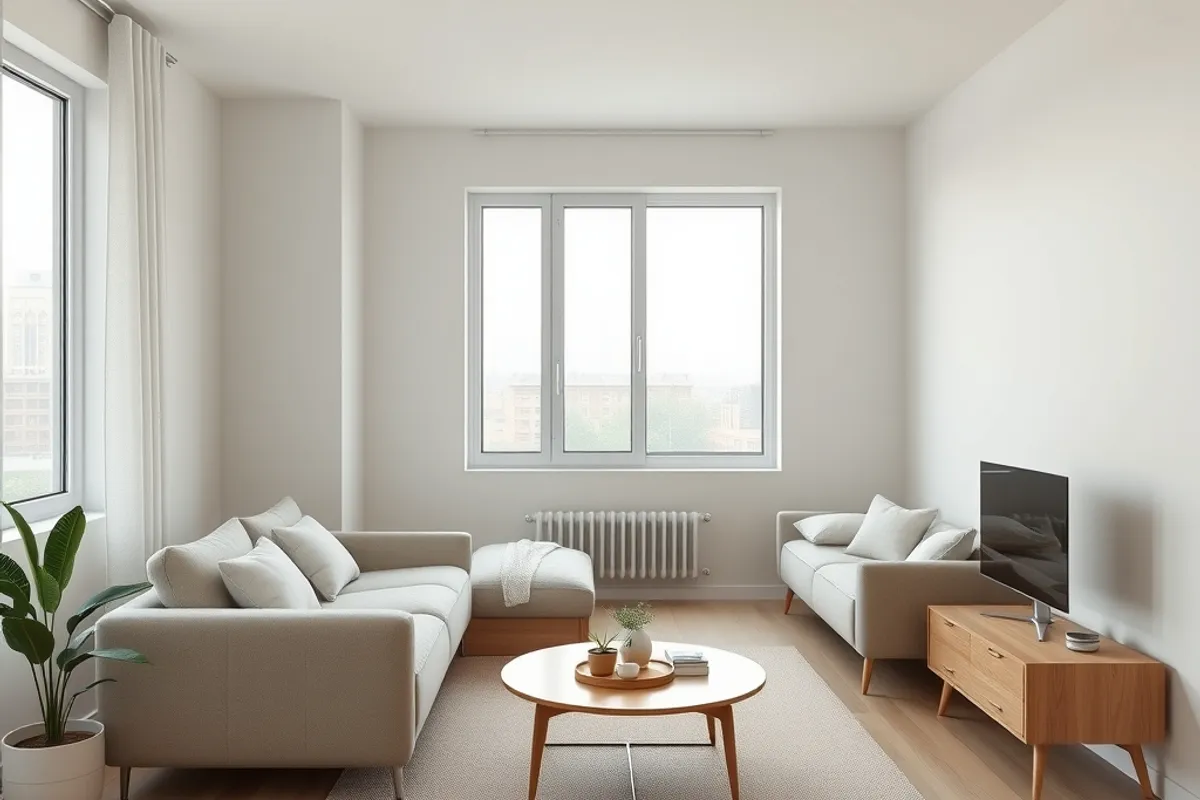
Rule 1: Measure everything twice
Measure the room, the doorways, the stairwell and the lift. Then measure the furniture you plan to buy, including the packaging. A sofa that fits the wall may not fit around the corner. Keep a simple floor plan with dimensions and mark the radiator, sockets and window swings.
This sounds dull and saves the most money. Online room visualizers are useful once the measurements are correct, not before. If you rent, check what you are allowed to fix to the wall. Our interior design guides cover rental-friendly changes, and the renovation hub explains small structural fixes.
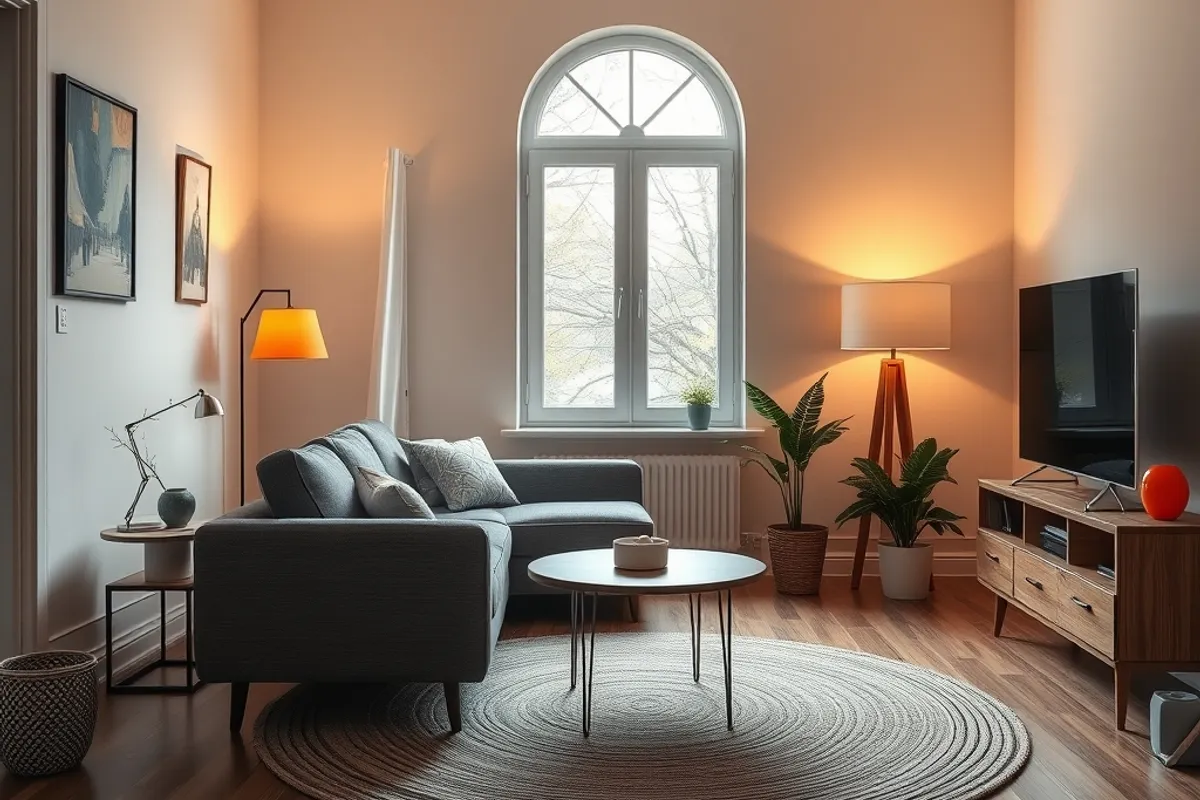
Rule 2: Zone the room, do not cram it
A studio can hold a living area, a sleeping area and a work corner if the zones are clear. Use a rug, a shelf or a change in lighting to mark each one. A room that tries to be everything at once feels smaller than a room with three deliberate zones.
Keep the main walking route clear. If you have to turn sideways to reach the window, the layout is wrong. Choose furniture with legs so the floor shows underneath. That visual gap makes a room feel less packed without removing anything.
Rule 3: Use colour with intent
Light walls and ceilings help, but an all-white room can feel like a rental. Choose a soft neutral for the walls and one deeper colour for a single wall, alcove or piece of joinery. Painting the ceiling the same colour as the wall can make the room feel taller, especially in a period flat.
Repeat the accent colour at least twice so it looks deliberate. Avoid too many small patterns. A large-scale print on a cushion or a single artwork reads better than five tiny motifs. If you are unsure, keep the big surfaces calm and put the colour in textiles.
A small room is not a problem to hide. It is a space that rewards exactly the right amount of furniture.
Rule 4: Fix the lighting first
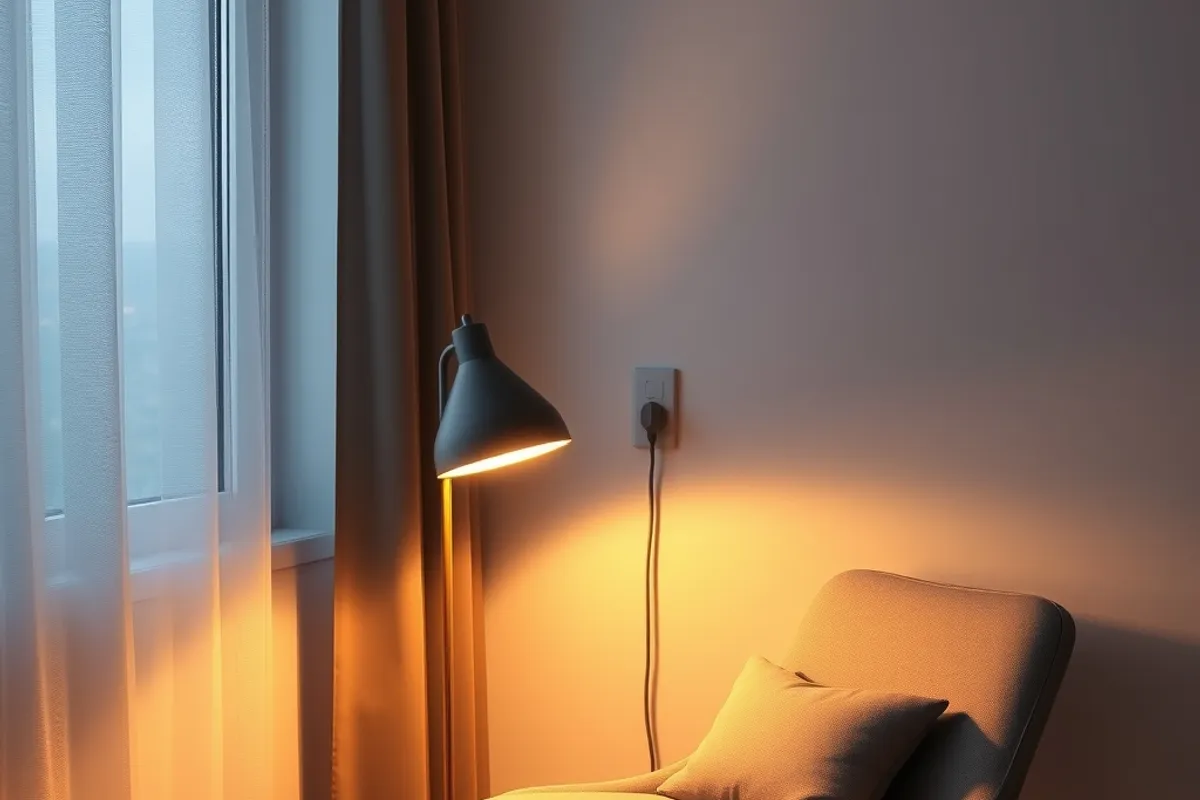
One ceiling light in the middle of a small room flattens everything. Use three layers instead: ambient light for the room, task light for reading or work, and accent light for a wall or plant. Floor lamps and plug-in wall lights avoid new wiring.
Choose warm bulbs around 2700K for living spaces and slightly cooler light for a desk. Put lamps in corners to lift the dark edges. A mirror opposite a window can double the daylight, but only if the reflection is worth seeing. Do not hang a mirror where it reflects clutter.
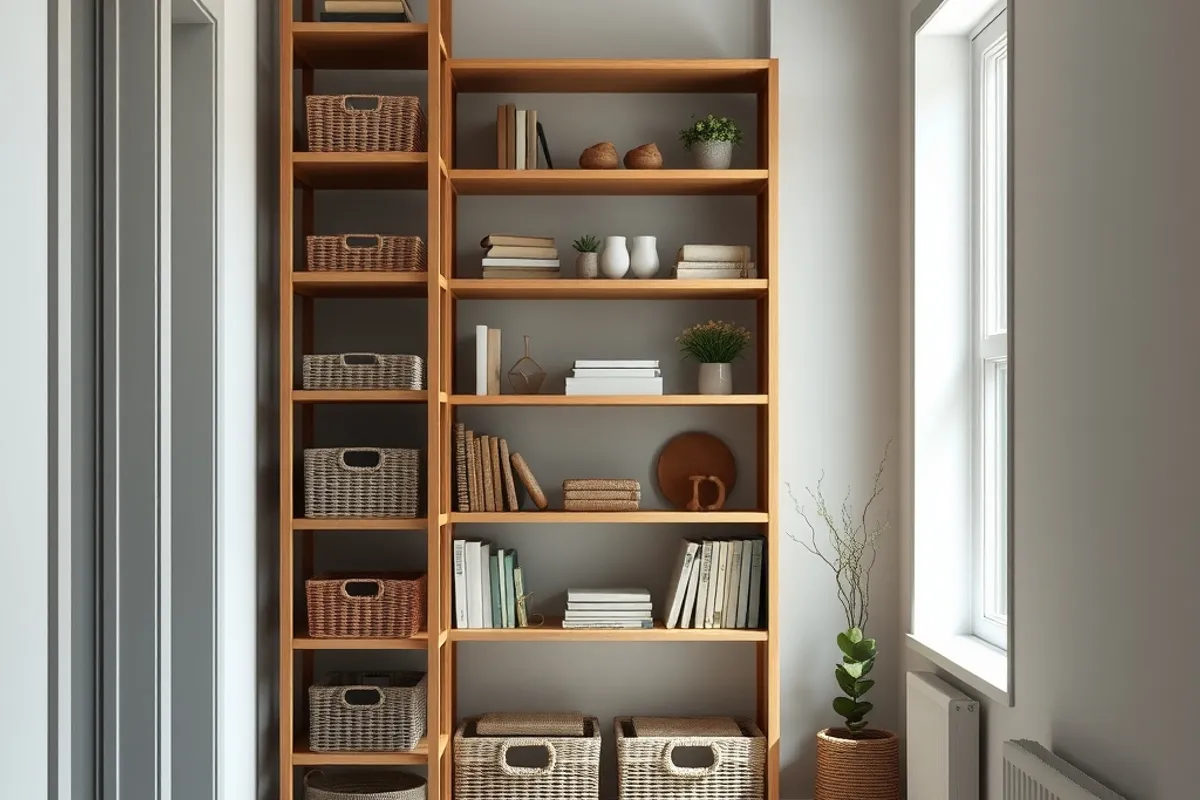
Rule 5: Go vertical with storage
Floor space is the scarce resource, so use the walls. Tall shelving, a slim cabinet and hooks near the door add storage without consuming another square metre. Built-in benches with storage underneath earn their cost in a hallway or bedroom.
Keep the top shelves for things you rarely use and leave the middle at eye level for daily items. Open shelves look calm only when they are edited. If you cannot keep them tidy, choose doors. Storage that is hard to use becomes clutter with a lid.
Rule 6: Scale furniture to the room
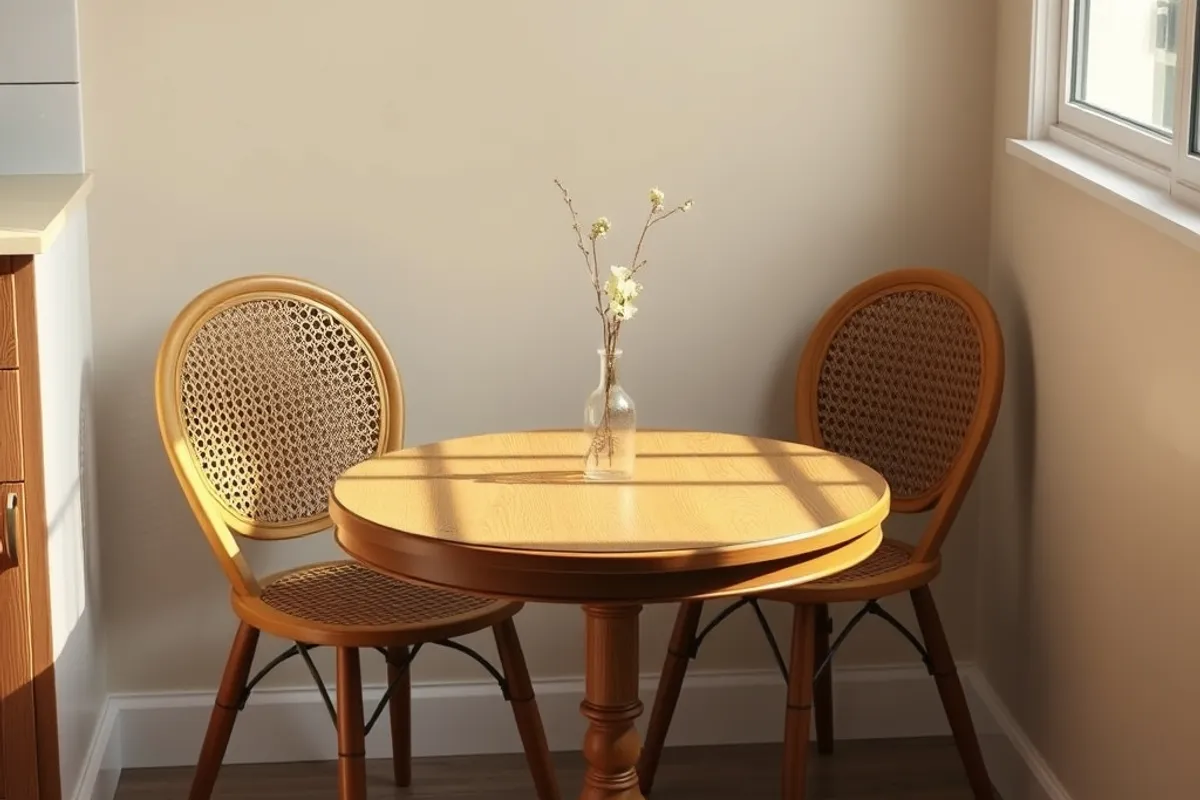
A huge sofa can make a small room feel cosy if it fits the main wall, but an average sofa floating in the middle makes it feel cramped. Choose pieces with a low back and slim arms. A round dining table uses a corner better than a rectangular one and lets people move around it.
Avoid sets. Matching furniture makes a room look like a showroom and locks you into one layout. Mix a solid piece with something lighter, such as a wooden table and cane chairs. Measure the seat depth before buying: a deep sofa eats floor space even when nobody is sitting on it.
Rules 7 to 10: Rugs, mirrors, clutter and mistakes
Use one rug large enough to sit under the front feet of the sofa. Small rugs chop up the floor. Hang a mirror where it reflects light or a view, not a pile of shoes. Keep clutter to a tray or a basket so the eye has one place to rest. And leave one surface empty.
The biggest mistake is buying for the life you wish you had. A home bar, a guest bed and a home gym in 35 square metres will fight each other. For more real-room inspiration, Architectural Digest publishes compact homes that show what actually fits. Start with the measurements, choose the zones, then buy only what earns its floor space.