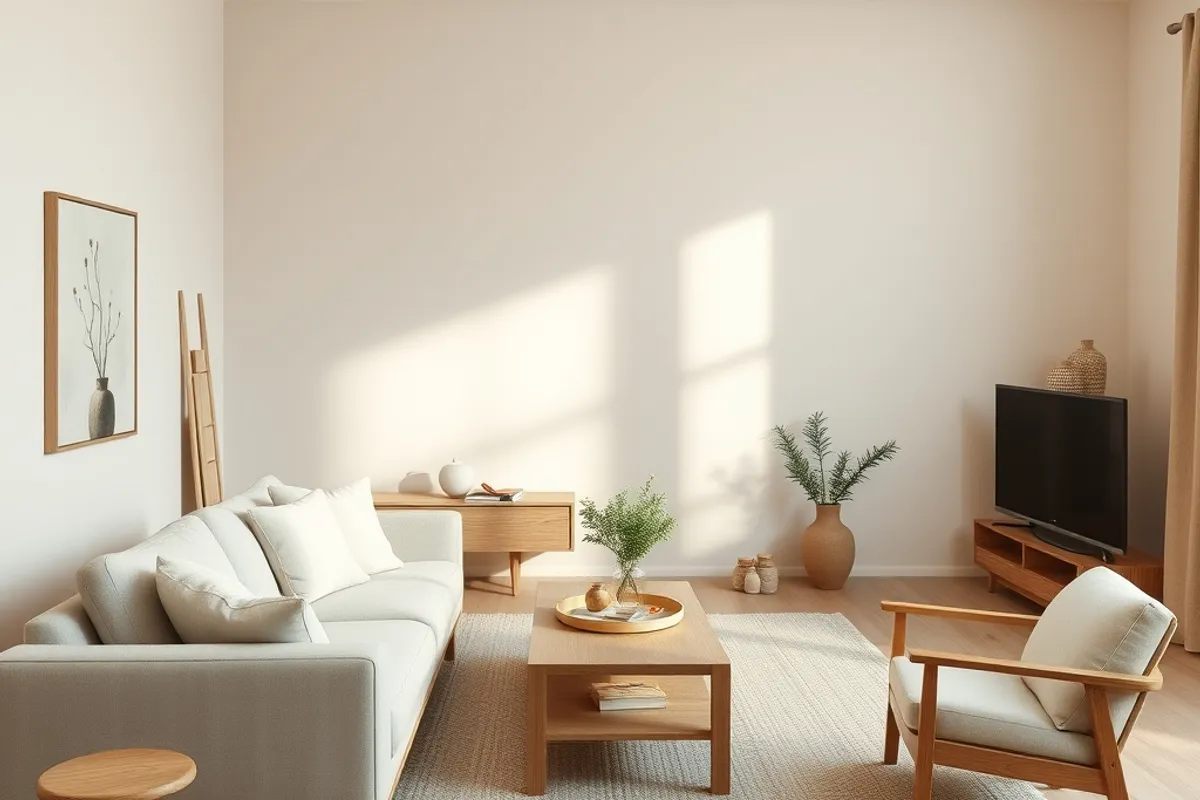
How to choose a style that lasts
Before you choose a look, look at the room. A Victorian cottage with small windows will fight a hard-edged industrial scheme. A 1970s ranch with low ceilings will feel cramped under heavy traditional furniture. The building gives you a grammar; the style is how you write within it.
Also consider the light. North-facing rooms need warm materials and soft lamps, while a bright south-facing room can carry cooler colours. If you are starting from scratch, our interior design hub has room-by-room guides, and the renovation section covers changes to layout and lighting.
Warm minimalism
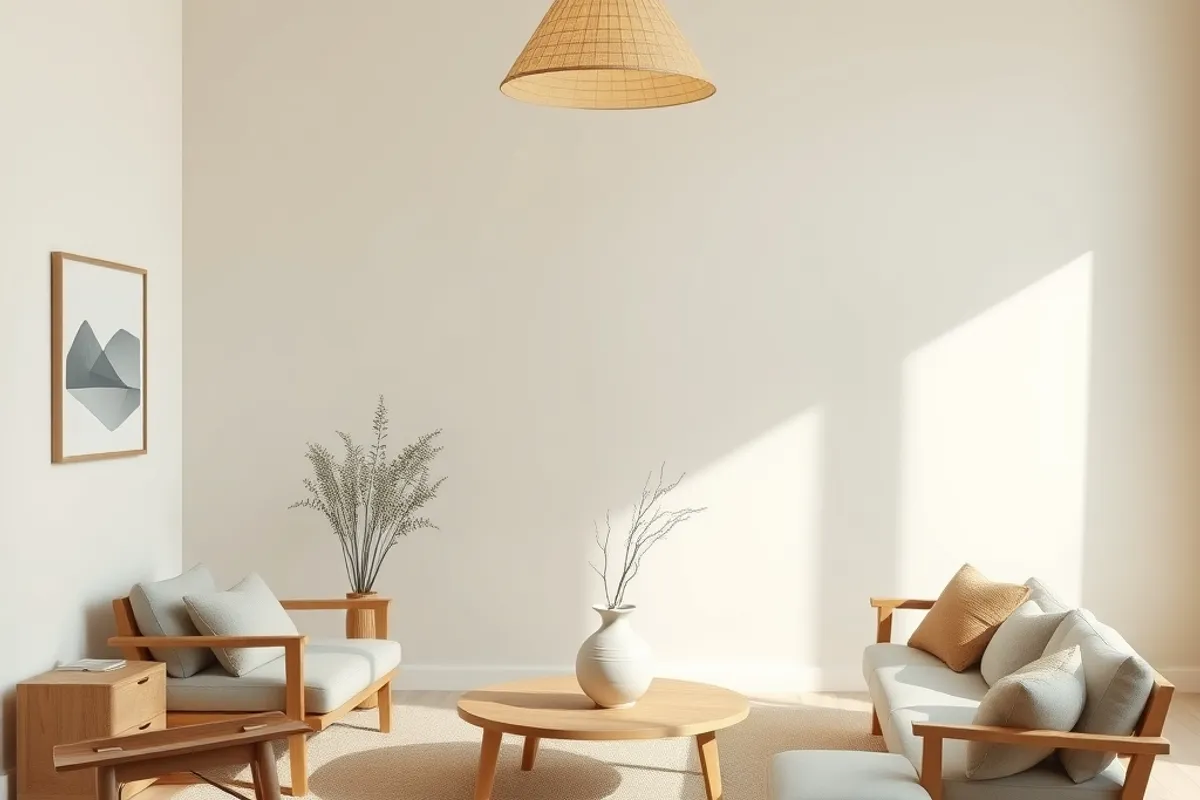
Warm minimalism keeps the calm of minimalism but removes the cold. Think plaster walls in oatmeal, oak or ash furniture, linen, wool and a few objects with texture. The palette stays quiet, but the materials do the talking. It suits apartments and period homes alike because it does not demand a particular age of building.
The trap is treating minimalism as emptiness. A room with one chair and a bare wall is not finished; it is a showroom. Add a lamp, a rug and somewhere to put a cup. The goal is fewer decisions, not fewer comforts. Choose one accent colour and repeat it twice, then stop.
Japandi: calm with a craft edge
Japandi blends Japanese restraint with Scandinavian practicality. Low furniture, natural wood, paper or fabric shades and a muted palette. It works well in small homes because the lines are simple and the storage is often built in. The look is forgiving of imperfect walls and uneven floors.
Authenticity matters. A mass-market bamboo shelf beside a plastic plant is not the same as a well-made oak bench. Buy fewer pieces and choose solid wood where you can. Leave space around furniture so the room can breathe. A japandi room that is packed with accessories has missed the point.
Good interiors are not decorated. They are edited until the room has enough, and then stopped.
Mid-century modern, without the cliché
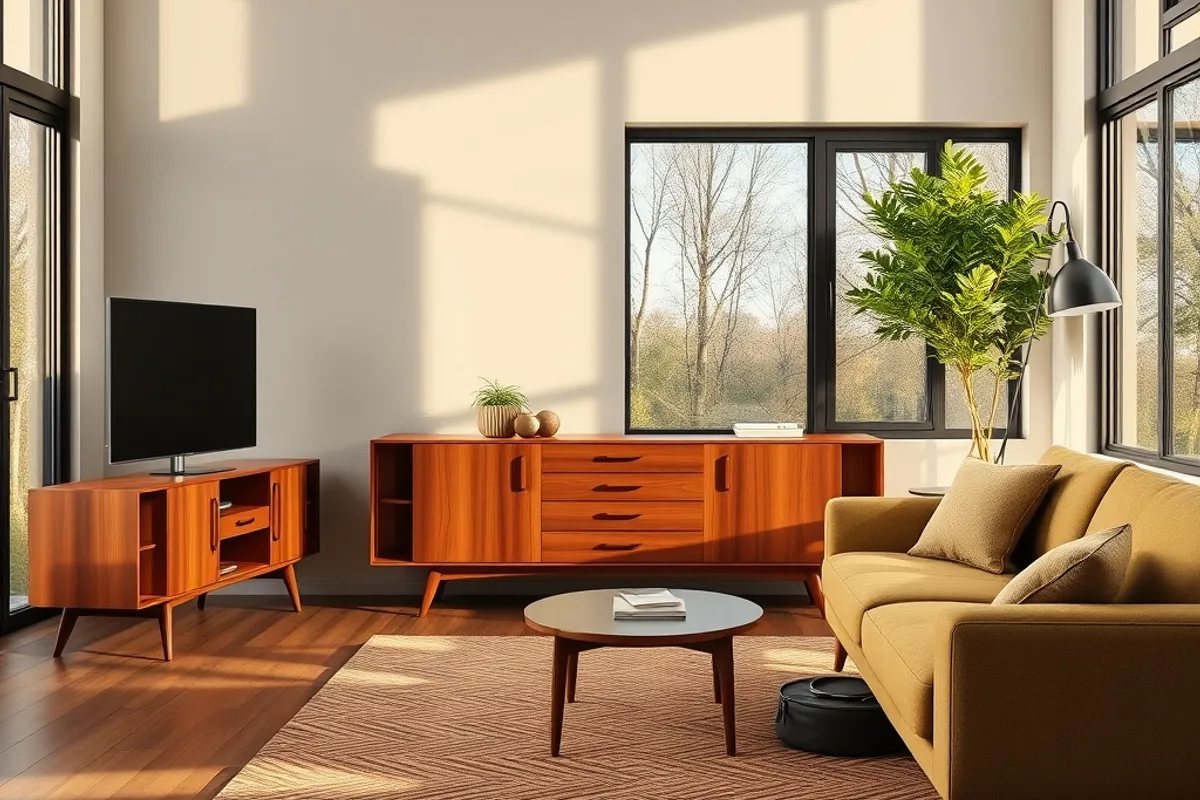
Mid-century modern remains popular because its proportions work. Tapered legs, low sofas and open shelving make a room feel larger. Walnut, teak and mustard or olive accents are the familiar palette. The style fits post-war houses with large windows, but it can also warm up a plain new build.
Avoid turning the room into a museum of replicas. One original chair is better than six copies, and a modern lamp can sit happily beside a vintage table. Check the scale: many reproductions are larger than the originals, which makes a small room feel crowded. Measure before you buy.
Modern heritage
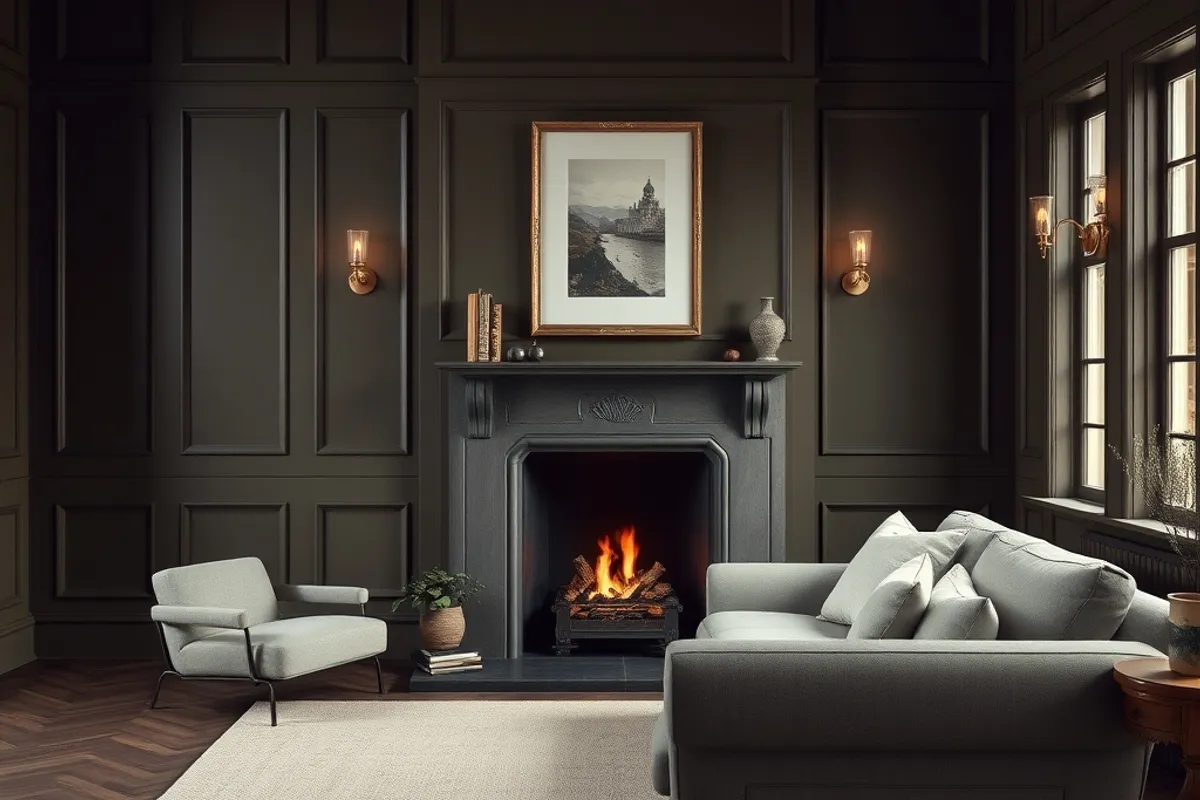
Modern heritage takes the bones of an older home, such as panelling, cornices and fireplaces, and updates the surfaces. Colours are deeper: olive, clay, oxblood and ink. Furniture is comfortable and a little generous. The result feels settled without looking like a period drama.
This style rewards good trades. Bad panelling looks worse than none, and a fireplace that is not properly lined is a hazard. If you are restoring original features, work with someone who has done it before. Keep at least one modern element, such as a clean-lined sofa or a simple light, so the room does not become heavy.
Coastal and Mediterranean, done quietly
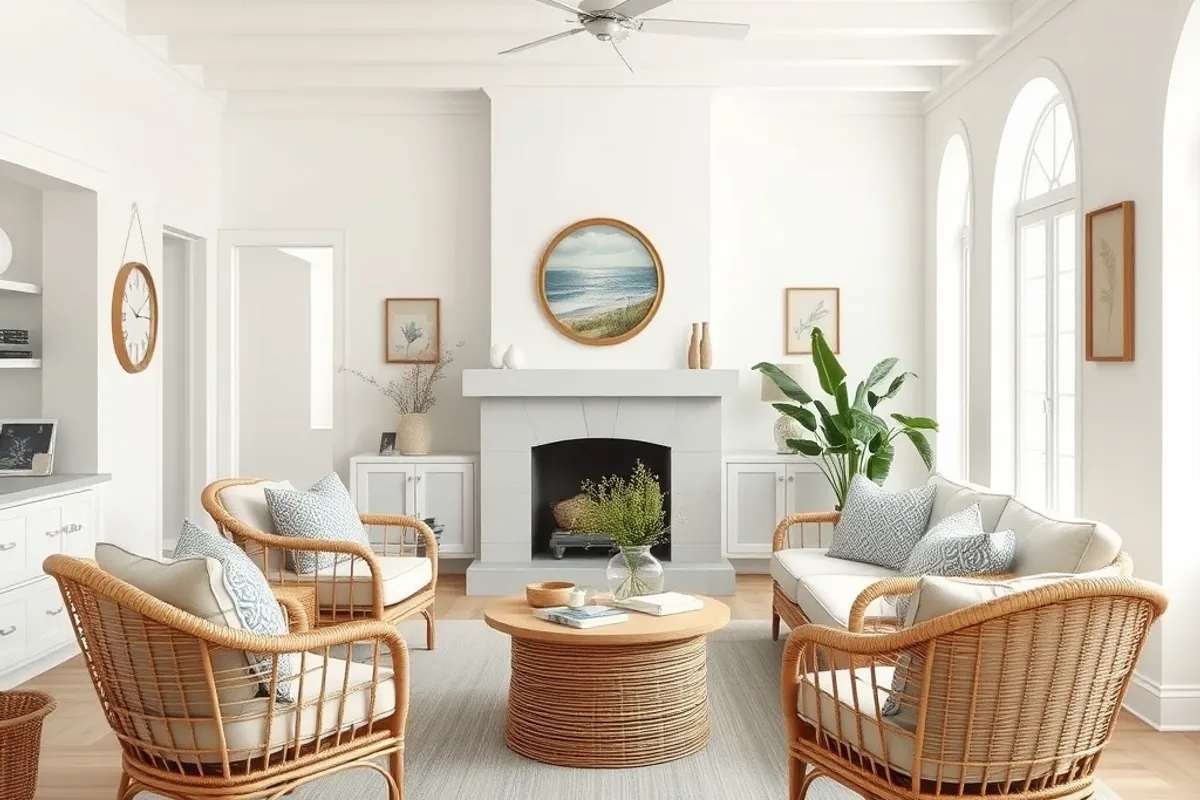
Coastal interiors fail when they become a theme park of anchors and striped cushions. The quieter version uses white or limewash walls, natural stone, rattan, linen and blue-grey accents. It suits bright rooms and works in city apartments as well as houses near water.
Mediterranean style follows similar logic with terracotta, plaster and arched shapes. Both looks need texture more than decoration. Choose one woven element, one stone surface and one plant. Then leave the walls alone. The sea does not need to be referenced on every cushion.
How to mix styles without regret
Pick a dominant style for 70 percent of the room and let the rest be supporting cast. Keep the architecture consistent, repeat two or three materials, and use colour to tie different periods together. A modern sofa can live with an antique table if the wood tones and proportions agree.
Budget in this order: lighting, seating, storage, then decoration. A beautiful room with bad light is a bad room. Our small space guide shows how to apply these ideas when every centimetre counts. For a wider view of current interiors, Dezeen is a useful source of real projects rather than staged catalogue shots.